
Hey there! If you’re missing a tooth (or a few) and wondering whether to go with a dental bridge or a dental implant, you’re not alone. This is one of the most common dilemmas I hear from patients across the USA. Both options can restore your smile, but they’re very different in how they work, how long they last, what they cost, and how they feel day-to-day.
Let’s break it all down in a friendly, no-pressure way so you can make the best decision for your mouth, your budget, and your lifestyle.
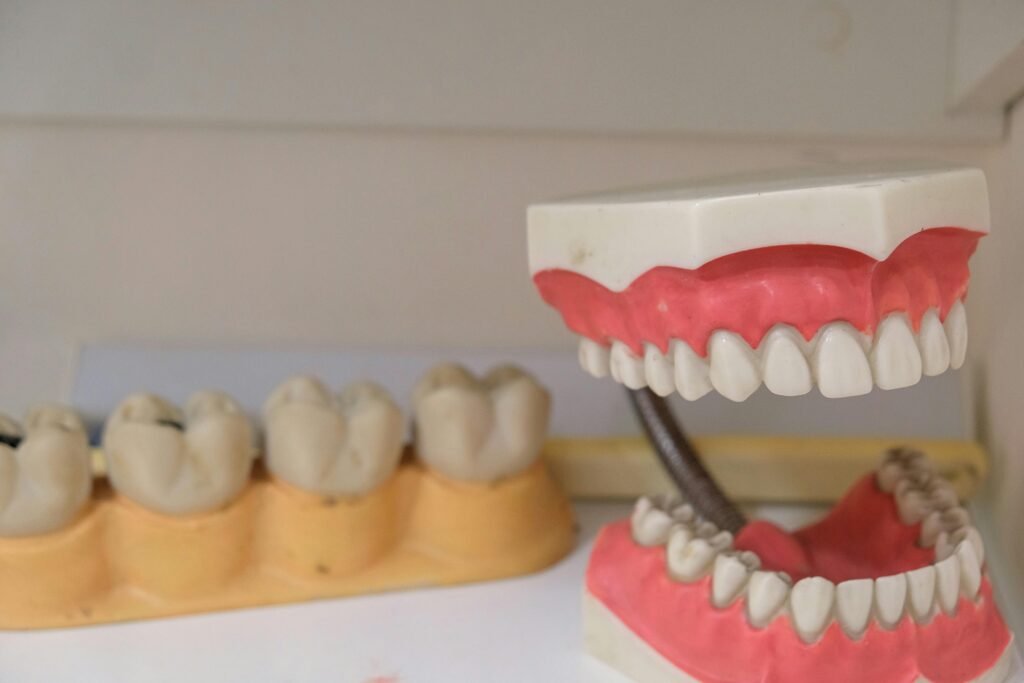
What Is a Dental Bridge?
A dental bridge is like a “false tooth” (called a pontic) that’s held in place by crowns on the teeth next to the gap. It literally bridges the space.
You usually need two healthy teeth on either side of the missing tooth. The dentist shapes those teeth, takes impressions, and in a couple of weeks you get a custom-made bridge cemented in place. No surgery involved.
What Is a Dental Implant?
A dental implant is a titanium post that’s surgically placed into your jawbone. Over a few months, the bone grows around it (a process called osseointegration), creating a rock-solid foundation. Then an abutment and a crown are attached on top.
It replaces the entire tooth — root and all — which is why it feels and functions so much like a natural tooth.
Longevity: How Long Will Each Actually Last?
Dental Bridges Most bridges last 10–15 years with good care. Some people get 7 years, others push 15+ depending on oral hygiene, grinding habits, and the material used (porcelain-fused-to-metal or all-ceramic).
Why do they need replacing? The supporting teeth can get decay, the bridge can loosen, or the cement can fail over time.
Dental Implants Implants are the longevity champions. The titanium post often lasts 20–30+ years or even a lifetime. The crown on top might need replacement after 15–20 years, but that’s usually much cheaper than replacing an entire bridge.

Success rates are excellent — over 95% at 10 years in most studies.
Winner for longevity: Dental implant (by a big margin).
Cost Comparison: Dental Bridge vs Implant Cost
This is usually the biggest question people ask. Here are realistic 2026 numbers for the USA (single tooth replacement):
| Option | Upfront Cost (without insurance) | Long-Term Cost (over 20–30 years) |
|---|---|---|
| 3-Unit Dental Bridge | $2,000 – $4,500 | $8,000 – $12,000+ (replacements) |
| Single Dental Implant | $3,000 – $6,500 | $4,000 – $7,000 (possible crown replacement) |
- Bridges are cheaper right now.
- Implants usually win on lifetime cost because you probably won’t need to replace them multiple times.
Insurance note: Many PPO plans cover 50% of bridges as “major” work. Implants are often covered partially or not at all, though more plans are starting to include them. Financing options like CareCredit are popular for implants.
Pro tip: Always ask your dentist for a “lifetime cost breakdown” — not just today’s price.
Comfort & Day-to-Day Feel
Bridges
- Feel pretty natural once they’re in.
- You might notice the bridge is slightly different when chewing hard foods.
- The supporting teeth take extra pressure, which can lead to sensitivity or future problems.
- Cleaning under the bridge (floss threaders or water flosser) is essential but takes getting used to.

Implants
- Most patients say they feel exactly like a real tooth. No difference in chewing, speaking, or smiling.
- No extra stress on neighboring teeth.
- Easier to clean — just brush and floss like normal.
- Best part: They help preserve your jawbone, so your face doesn’t slowly collapse over the years (a common issue with bridges and missing teeth).
Winner for comfort: Dental implant, hands down. Most people who switch from a bridge to an implant say it feels like an upgrade.
Other Important Factors to Consider
Procedure & Recovery
- Bridge: 2–3 visits, done in 2–3 weeks, minimal downtime.
- Implant: Surgery + 3–6 months healing. You may get a temporary tooth during that time.
Who Should Choose What?
Consider a bridge if:
- You want a faster, cheaper solution right now.
- You don’t want surgery.
- Your budget is tight in the short term.
- The adjacent teeth already need crowns.
Consider an implant if:
- You want the longest-lasting, most natural option.
- You care about keeping your jawbone healthy.
- You’re willing to invest more upfront for lower long-term cost.
- You grind your teeth or have a strong bite (implants handle this better).
Real Talk from Patients
Many Americans in their 40s–60s start with a bridge because it’s quicker and more affordable. Then, 10–12 years later, they upgrade to an implant and wish they’d done it sooner. Others are thrilled with their bridge and never look back. There’s no universal “best” — it depends on your age, health, budget, and priorities.

Final Thoughts: Which One Is Right for You?
If someone asked me, “What would you choose for your own mouth?” — I’d lean toward an implant for most situations because of the longevity, bone preservation, and natural feel. But I completely understand when a bridge makes more sense for budget or timing reasons.
The smartest move? Book a consultation with a dentist you trust. They’ll take X-rays, check your bone density, and give you honest numbers tailored to your case.
Got questions about your specific situation? Drop them in the comments or talk to your dentist. A great smile is worth the research!